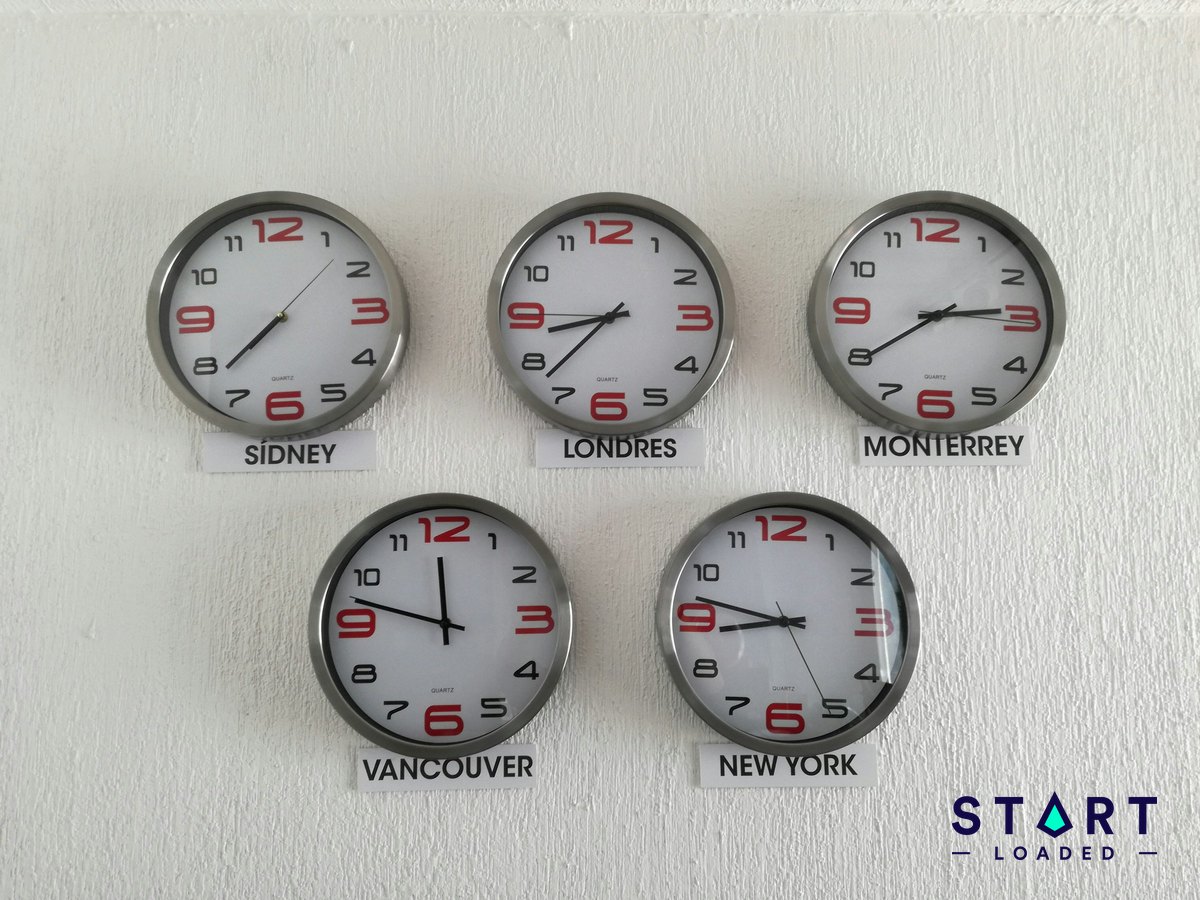

When I left London and flew to Bangkok, I thought the hard part would be finding clients. It was not. The hard part was waking up to a full inbox from people who had been waiting for me all night.
Getting confused by time differences is one of the five mistakes people make when becoming a digital nomad. It sounds small. It is not. Miss one deadline because you misread a time and a client starts to wonder if remote work was a good idea.
The good news is that digital nomad time zones are a system problem. Fix the system and the distance stops mattering.
Know your overlap
Lombok runs on Central Indonesian Time, eight hours ahead of London in winter and seven in summer. A client in London starts work at 9am. That is 5pm for you. Their afternoon is your night.
So start with one simple question: which hours do you and your client share? Write them down for every client. That window is where calls, quick replies and approvals live. Everything else is your time.
A world clock app saves you from doing the maths in your head. World Time Buddy lines up several cities in one view, so you can pick a meeting slot without calling anyone at 2am.
Set meeting rules and tell clients
In my book Laid Back Freelancing I suggest writing your own rules for how you work. One of the examples is simple: only take meetings on one day of the week. On the road, rules like this protect you.
- Pick one or two meeting days and keep calls inside your overlap.
- Share a booking link so clients choose a slot that already suits you.
- Put your working hours and time zone in your email signature.
- Agree how fast you will reply. Within one working day is fair and realistic.
Clients do not need you online all day. They need to know when they will hear from you.
Protect your best hours for deep work
A time difference can be a gift. While your clients sleep, nobody interrupts you.
I am most creative in the morning, so that is when I do my most creative work. In my book I suggest a two hour block, for example 8 to 10am, for the most important task of the day, before you read a single email. On the road this matters even more. Do the real work first, then answer messages in the overlap.
Batch your replies too. Two slots a day beats checking your phone every ten minutes on a beach.
Write deadlines in their time zone
“Friday” means different things in Bali and New York. Write every deadline with a date, a time and a time zone, and use the client’s time zone, not yours.
Deliver early when the gap is big. If your client wakes up to finished work, the time difference looks like a superpower. If they wake up to silence, it looks like a problem.
Plan travel days around the work
Moving between countries can shift your overlap overnight. Before you book a flight, check what the new time zone does to your client calls. Never put a big delivery on a travel day. Flights get delayed, buses break down and wifi disappears.
Have a backup plan for the day the internet fails. Know where the nearest cafe or coworking space is, and keep your phone ready as a hotspot.
Choose clients that fit your time zone
Some time zones are easier than others. From Indonesia, clients in Australia and Asia are close, while clients in the USA mean early mornings or late nights. Think about where your clients are when you choose where to live, not after.
If you are still deciding where to go, read my guide to Lombok for digital nomads and why slow travel works better for remote work. Fewer moves means fewer time zone surprises.
Time zones do not have to run your life. Set the overlap, protect your mornings and tell clients how you work. Most of them will respect it, and the good ones will love it.
Photo by Luis Cortes on Unsplash.

My free guide to leaving the office behind: the steps I took to build a business I can run from anywhere.
P.S. It is free. Read it on your next flight.