

Most freelancers describe themselves from the outside in. “I’m a photographer.” “I design websites.” It’s accurate, and it gives a client no reason to care before they start comparing prices.
The Golden Circle flips that order. Start with why, the purpose behind your business. Then how, the process that makes you different. Finish with what, the service the client actually receives. The idea comes from Simon Sinek’s 2009 TED talk and his book Start with Why. This lesson applies it to a one person creative business.
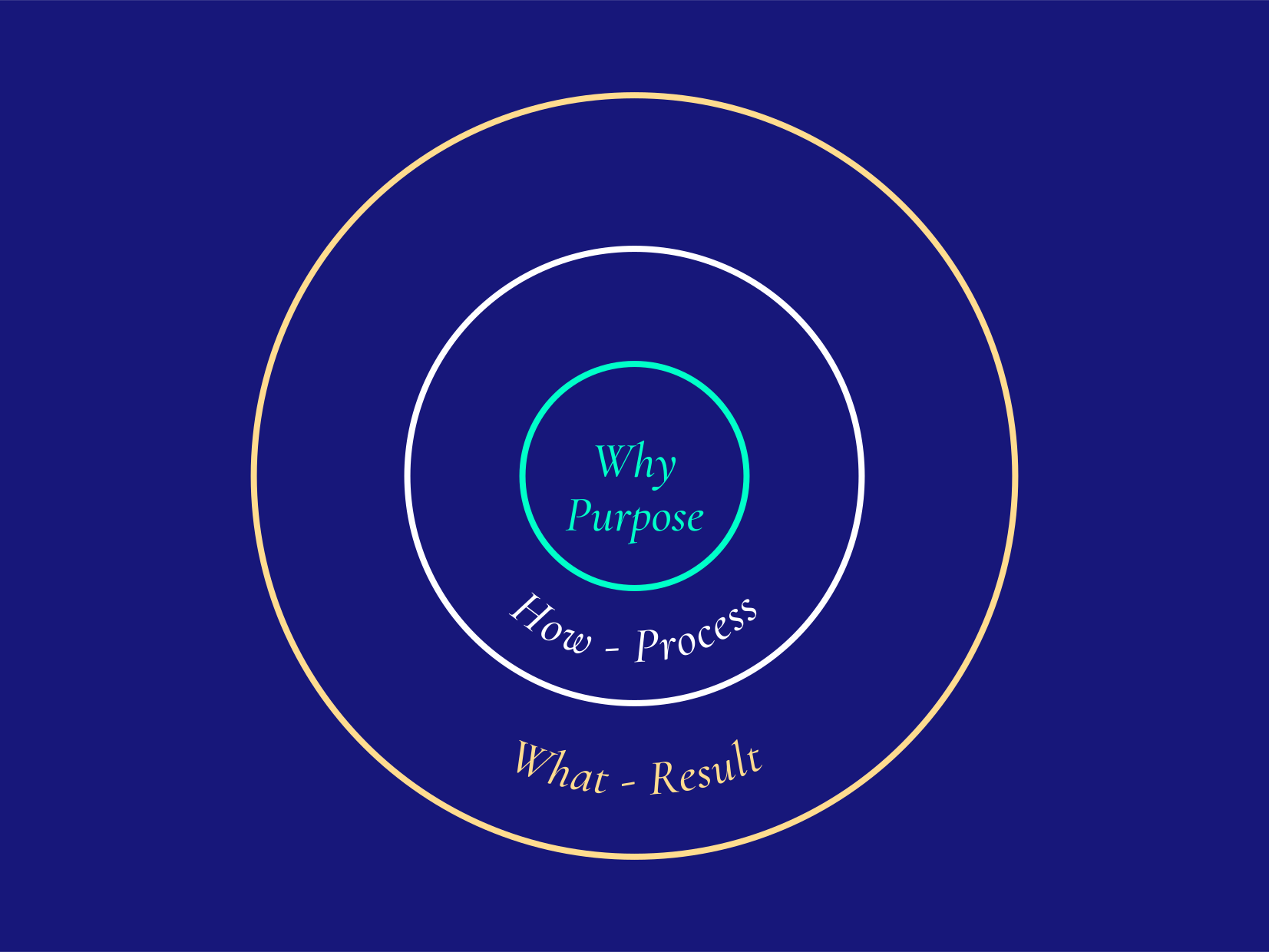
The illustration in the book shows three concentric circles. The turquoise centre reads Why, Purpose. The white middle ring reads How, Process. The yellow outer ring reads What, Result. You read it from the middle outwards, which is exactly the order Sinek suggests you communicate in.
What the why, how and what mean
Your why is the core of your business. It’s the reason you do this work at all, beyond the money.
Your how is what you do to be special or stand out from the competition. It’s your process: your method and the way your values show up in the work.
Your what is your products and services. It’s the result, the thing the client pays for and takes away.
Most of us find the what easy and the why uncomfortable. That’s normal. The what is visible every day. The why takes a bit of digging.
The Apple example
The book uses the example Sinek made famous. Apple’s why is “we think differently, we want to challenge the status quo”. Its how is making products that are simple, elegant and well designed. Its what is computers, tablets and phones.
Read that list backwards and it sounds like every other technology company. Read it from the centre and it sounds like a point of view. That shift is what you’re after.
What it looks like for a creative freelancer
Imagine a brand designer whose why is that small businesses deserve to look as good as they really are. Their how is a short, research led process with the owner involved in every decision. Their what is logos, identities and brand guidelines.
Or picture a wedding photographer. The why: the day goes fast, and people deserve to relive it honestly. The how: a documentary approach, no stiff posing, and only a small number of weddings a year. The what: full day coverage, an edited gallery and a printed album.
A copywriter might say good ideas get lost in bad sentences. Their how is to interview first, write in the customer’s own words and cut everything else. Their what is website copy, emails and case studies.
None of those whys are grand. They’re true and specific, and that’s enough.
How to find your why
If “why” feels too big a question, come at it sideways. What annoys you about how your industry usually works? What do you want to be different for clients after they’ve worked with you? What would you keep doing even if it paid less? Which project made you proudest, and what exactly about it?
Answer each in a line, then look for the thread. Your why doesn’t need to change the world. It needs to be honest enough that the right client reads it and nods.
Where to put it once it’s written
The book’s advice is to write your why, how and what into your brand guidelines and build them into your content: your CV, website, portfolio and so on. That way you, and anyone who works with you, stay pointed in the same direction.
In practice, your homepage can lead with the why in one sentence, follow with the how, then list the what. Your about page is the place to tell the story behind your why. Proposals can open with why this project matters before getting into process. And a short section in your brand guidelines helps collaborators and subcontractors understand how you work.
It’s also a quiet filter. When a project or client clashes with your why, that’s useful information before you say yes.
Mistakes to avoid
The first is writing a slogan instead of a purpose. “Passion for pixels” sounds nice and says nothing.
The second is a how that’s really a list of software. Tools aren’t a process. Clients want to know how you think and work, not which apps you open.
The third is hiding the what. Start with why, but don’t forget to say clearly what people can buy.
And the last is copying Apple’s tone. Borrow the structure, not the attitude.
Try it in 15 minutes
- Answer the four why prompts above, one line each.
- Write your why in a single sentence, then your how in a single sentence.
- List your what: the two or three services you actually sell.
- Read them in order, why to what, and paste the result into your brand guidelines or homepage draft.
Read it aloud. If it sounds like you on a good day, you’re done for now.
All Laid Back Freelancing lessons
Cover photo by Himesh Kumar Behera on Unsplash.