

Freelancing is constant reinvention. Clients change, tools change and so do you. Sooner or later most freelancers need to pivot their business, and the worry is always the same: what if I change direction and lose what made me good in the first place?
The answer is to write down your core values before you change anything. Services, niches and styles can all shift. Values give you a fixed point to steer by, so each change moves you closer to who you are instead of further away.
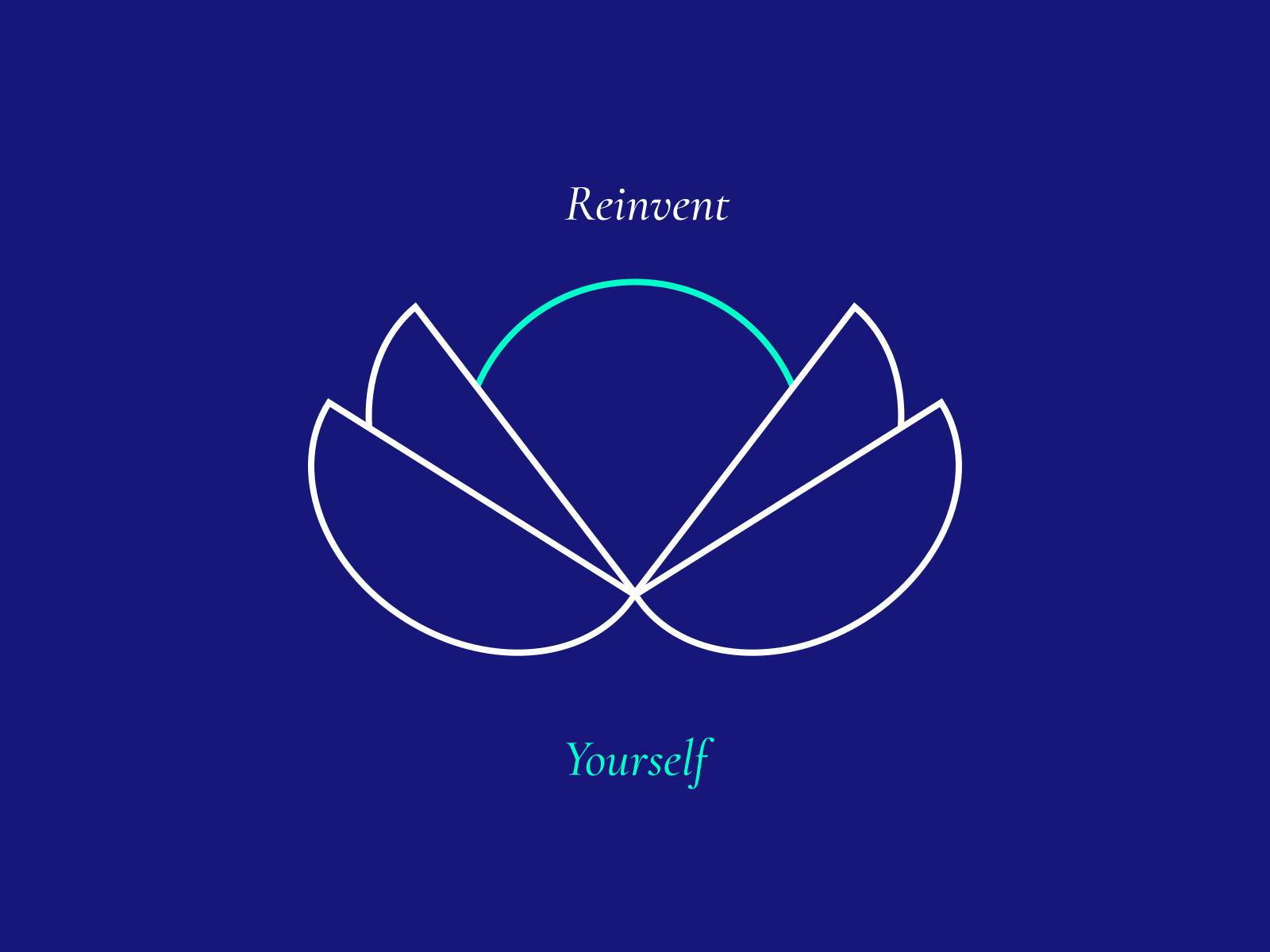
The illustration in the book shows white petals opening outwards like a lotus around a turquoise arc, with the words Reinvent Yourself. The book talks about consciously shedding your skin. The petals are the old layers opening up and falling away. The centre stays where it is. That centre is your values.
Why freelancers need to reinvent themselves
You may find that an unexpected niche or type of client works really well. A designer who started with logos ends up making pitch decks for startups. A wedding photographer discovers they love shooting products. Staying put because “this is what I do” can mean missing the work that suits you best.
Reinvention also protects you in a fast changing industry. When a new tool makes part of your service cheap or automatic, the freelancers who adapt keep their value. The ones who don’t are left competing on price for work that’s slowly disappearing.
The book frames this as something to do on purpose. Changing direction consciously helps you evolve. Being forced to change by a lost client or a quiet month is much harder.
Values are the part that doesn’t change
The exercise in the book is simple: define your core values as a human being. They may change over time, but having them in writing means you can refer back to them whenever a decision gets cloudy.
In the book, the example list reads: simplicity, respect, self love, curiosity.
Four words doesn’t sound like much, but they do two important jobs in a pivot.
First, they tell you when to change. If your current work keeps clashing with a value, that’s a signal. Someone who values simplicity will feel it when every project turns into a sprawling mess of revisions and side requests.
Second, they tell you what to keep. Whatever new direction you choose should still honour the list. A pivot that breaks your values isn’t freedom. It’s just a different cage.
Turn each value into a question
Values become far more useful when you can test a decision against them. Write each one as a question you can ask about any new direction.
| Value | Question to ask |
|---|---|
| Simplicity | Will this make my work and life simpler or more complicated? |
| Respect | Will these clients respect my time and expertise? |
| Self love | Can I do this without burning out? |
| Curiosity | Will I still be learning something in a year? |
Run any new idea through your questions before you commit to it. If it fails two or three, it doesn’t matter how good the money looks.
Signs it’s time to pivot
The clearest sign is dread. If a type of project that used to excite you now fills you with dread, something has shifted, either in you or in the work.
Another is a steady clash with your values. Maybe the clients you attract keep pushing back on your time, or the projects keep getting bigger and messier. When the same problem appears again and again, it’s rarely bad luck.
Watch your market too. If prices in your area keep falling because the work is turning into a commodity, waiting it out rarely helps.
And pay attention to surprises. When your best results keep coming from a side project or an unexpected kind of client, that’s often where your next direction is hiding. A freelance career audit is a good way to spot these patterns before you act on them.
How to pivot gently
Reinvention doesn’t need a dramatic announcement. The calmest pivots happen in stages, with your existing work still paying the bills.
- Run the new direction as a small test alongside your current work. The method in how to test freelance niches works well here.
- Show one or two pieces of the new work on your website and social channels.
- Tell your best existing clients. They’re often your first clients or referrals in the new area.
- Change your website headline once the new work is paying.
- Retire old services gradually, starting with the ones that clash most with your values.
Say you’re a wedding photographer who values curiosity and simplicity. Weekend weddings and long editing sessions clash with both. You might spend two months testing product photography for small food brands, checking each job against your four questions. If the work is simpler to schedule and you’re learning about lighting again, you could keep a couple of wedding dates a year for referrals and put product work first on your website.
Where it goes wrong
The most common mistake is pivoting away from a feeling. Boredom can sometimes be fixed with better clients or a better process. Check the values before you change everything.
The second is pivoting too often. A new direction needs time to show whether it works. Give it a fair run before you judge it.
Be careful, too, with aspirational values. Write the ones you actually live by, not the ones that sound good on a website. A list you don’t believe won’t help you decide anything.
Finally, don’t burn bridges. Old clients and peers often send the first work in the new direction, so leave on good terms.
Try it in 15 minutes
- Write five words that describe how you want to live and work.
- Cut the list to the four that feel truest.
- Turn each one into a question, like the table above.
- Run your current main service through the four questions and note any clashes.
If a clash keeps showing up, that’s where your next change should start.
All Laid Back Freelancing lessons
Cover photo by Jay Castor on Unsplash.