

You don’t find a freelance niche by thinking harder. You find it by testing.
Pick two or three possible directions, give each one a small, real offer, and watch which brings the best clients, the best work and the most enjoyment. Running several paths at once takes a bit more time, but as the book says, it may be the only way to find out what really matters.
Most niche advice tells you to choose one and commit. That’s good advice once you know. When you don’t, it means committing to a guess.
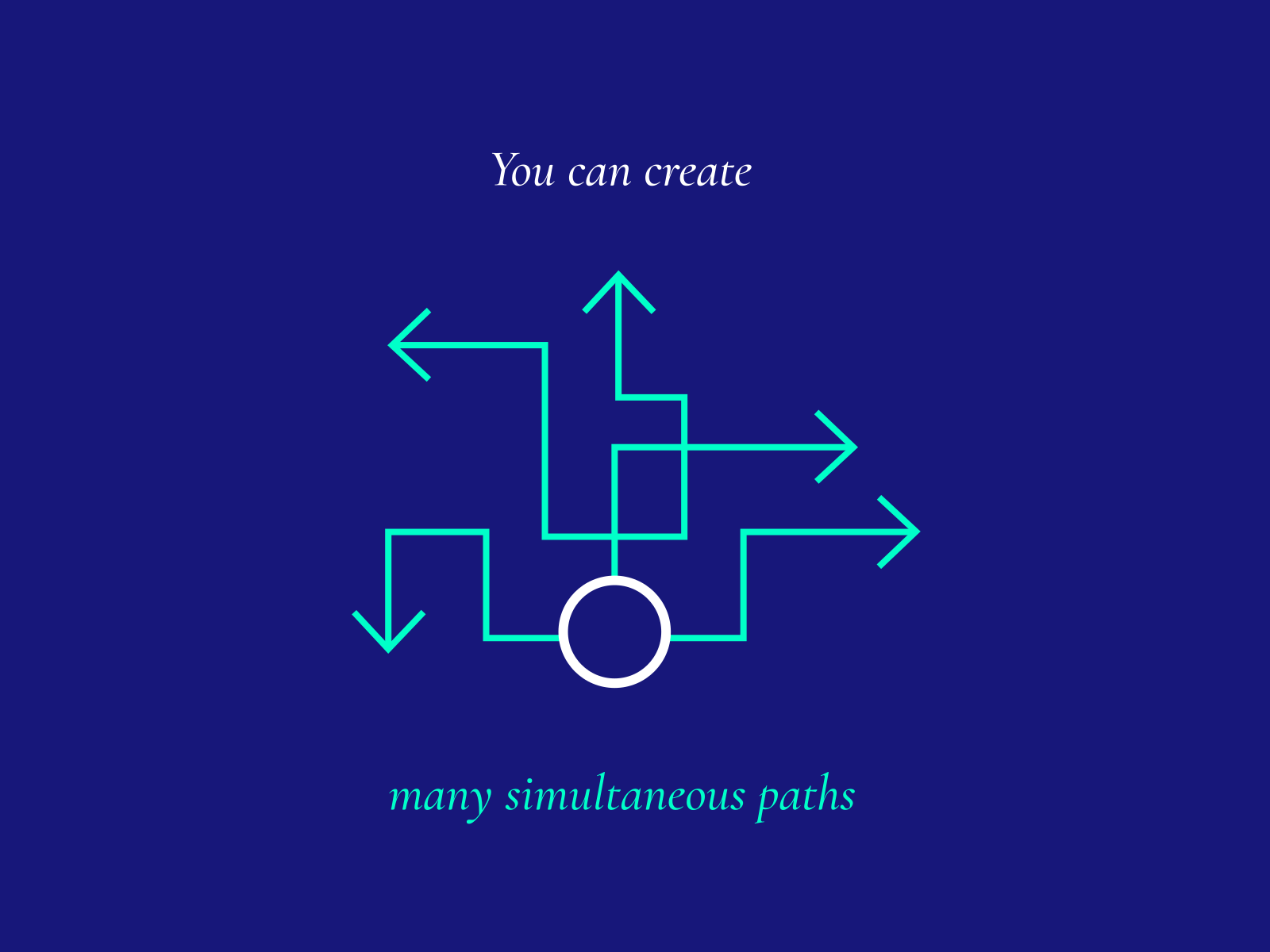
The illustration in the book shows several turquoise arrows leaving one white circle and turning at right angles in different directions, some heading up, some across, some doubling back. The caption reads: you can create many simultaneous paths. They all start from the same place, which is you, and nothing says you have to walk them one at a time.
Why choosing a niche feels impossible
Finding a niche is one of the hardest decisions freelancers face, and the book names it directly: deciding which path to take is especially difficult when you’re trying to find a niche or target audience.
There are two reasons. When rent depends on the next project, saying no to anyone feels reckless. And when you have several interests, picking one feels like throwing the others away.
Testing deals with both. You keep earning while you learn, and you choose on evidence rather than fear.
How to test niches in parallel
Start with your skills and interests
The exercise in the book begins here: make a list of your skills and the things you enjoy doing or would like to do. The example list reads drumming, DJing, cooking, playing guitar, design, UX UI and teaching. Write yours without filtering. Odd entries are often the useful ones.
Combine them into possible niches
A niche is usually a skill offered to a particular type of client. Mixing items from your list is the quickest way to find options. Using the book’s example list, it might look like this:
| Skill | Client type | Possible niche |
|---|---|---|
| Design | Music | Brand identities for independent artists and labels |
| UX UI | Food | Ordering apps and websites for restaurants |
| Teaching | Design | Workshops for in house design teams |
Write five or six combinations, then cut them down to the two or three you’d be happy doing for a year.
Give each path a small offer
Each path needs something concrete a client can say yes to. Keep it small and quick to deliver: a fixed price starter package, a short audit or review, or one portfolio piece made for that niche. A self initiated project counts.
Put the offers in front of real people
Use low effort signals first. Change your LinkedIn headline for a fortnight, post one case study per niche, and send five personal emails to people in each group. You’re not launching three businesses. You’re running three small experiments.
How to judge the results
Give the test six to eight weeks, then score each path from one to five on four things. Response: did people reply, ask questions or buy? Value: could this pay well? Energy: did you enjoy the work and the people? Size: are there enough of these clients to keep you busy?
The winner is rarely the path with the most replies. It’s usually the one with the best balance of value and energy.
Say you’re a web designer testing restaurants and music artists side by side. The music path might get more excited replies, while the restaurant path brings fewer enquiries but clearer budgets and repeat work. Scoring both on the same four measures stops the louder result from making the decision for you.
When to stop running several paths
Parallel paths are for finding out. Once one path scores clearly higher, make it the main message on your website and portfolio. You can keep a second path running quietly in the background, but your marketing should speak to one audience at a time.
The next lessons help you narrow down from there: specialist vs generalist and target market vs target audience.
Where testing goes wrong
The first mistake is testing too many niches at once. Three is the limit. Beyond that, none of them gets a fair test.
The second is testing in secret. If nobody sees the offer, you’ve learned nothing, however good it looks on paper.
Judging too early is another. Two weeks isn’t long enough for most people to reply, let alone buy.
And don’t choose on money alone. A niche that pays well but drains you won’t last.
Questions people ask
How many niches should I test at once?
Two or three. One gives you nothing to compare, and more than three means none of them gets a fair test.
How long should a niche test run?
Six to eight weeks is enough to send outreach, publish a piece of work for each niche and see who replies. Judge on enquiries and the quality of conversations, not likes.
What if I have too many interests to choose a niche?
Combine them instead of choosing between them. An unusual mix of interests can become the thing that makes you easy to remember.
Try it in 15 minutes
- List your skills and interests, as many as you can, in five minutes.
- Combine them into five possible niches, each a skill plus a client type.
- Pick the three you’d be happiest doing for a year.
- For each, write one small offer a client could buy this month.
That’s your test plan. Start with the first five emails this week.
All Laid Back Freelancing lessons
Cover photo by Stacy on Unsplash.