

How many times have you been thrilled by a new idea, a product, a new service or a side project, and started imagining how well it will go? Then a few weeks later it feels heavy, slow and maybe not worth it.
That drop is normal. Creating something new follows a fairly predictable emotional cycle: exhilarated at the start, surprised, disappointed, exhausted, then hopeful and finally delighted if you keep going. Knowing the cycle in advance won’t make the dip disappear. It stops you mistaking a normal stage for a sign to quit.
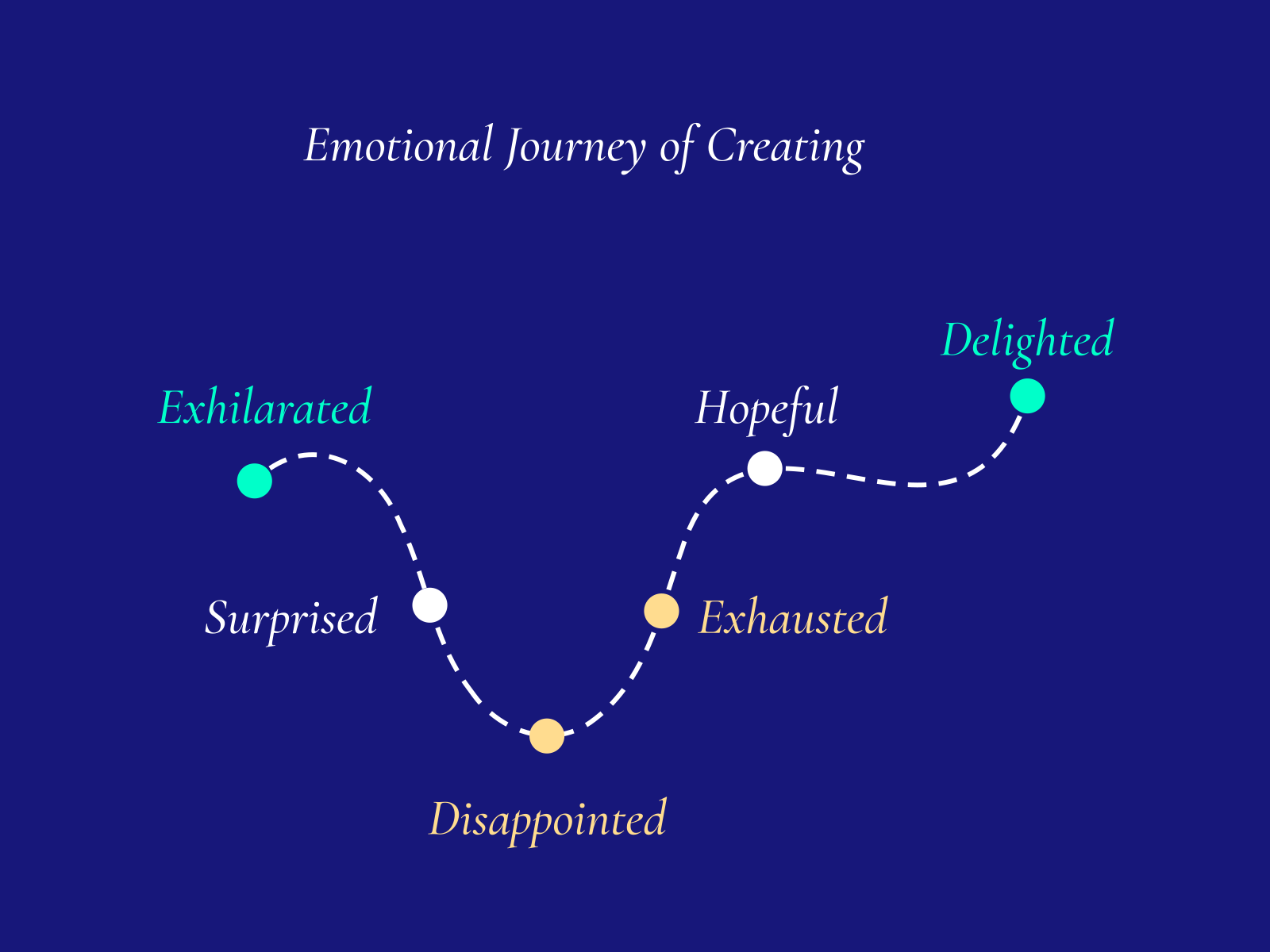
The illustration in the book shows a dashed line that dips and then climbs through six dots: Exhilarated, Surprised and Disappointed on the way down, then Exhausted, Hopeful and Delighted on the way back up. The end sits higher than the start, and the only way there is through the bottom of the curve. The book’s point is that creating something great is hard, but being aware of the long emotional journey ahead greatly improves your chances of getting there.
The six stages
Each stage has its own feeling, and each one tends to arrive for a reason.
Exhilarated is the idea itself. Everything seems possible. Surprised comes when you look around and realise other people have had the same idea. Disappointed follows when you learn what it really costs, in money, time or effort. Exhausted is the long middle, when the work is hard and the rewards haven’t arrived. Hopeful is the first sign of life. Delighted is the moment it pays off.
In the book, the example follows someone building a dating app:
- Exhilarated: create a new dating app.
- Surprised: there are many dating apps.
- Disappointed: it’s expensive to develop.
- Exhausted: marketing is hard.
- Hopeful: there are a few downloads.
- Delighted: I got investment.
What it looks like in freelance work
The same curve shows up in everyday freelance projects. Say you’re a designer who decides to sell a brand guidelines template, the do it yourself level from how to package freelance services.
At first you’re exhilarated, because this could earn while you’re not working. Then you’re surprised to find hundreds of templates already for sale. Disappointment arrives when you realise making a good one takes weeks, not a weekend. Exhaustion sets in when nobody buys it in the first month. Hope comes with a couple of sales after a newsletter mention. Delight arrives when a buyer of the template comes back and books a workshop.
None of those stages means the idea was wrong. They’re just the shape of making something.
A model from the world of change
The curve looks a lot like the Emotional Cycle of Change described by Don Kelley and Daryl Conner in 1979. Their version moves from uninformed optimism through informed pessimism to hopeful realism, informed optimism and finally completion.
Their key insight fits creative work well. The drop comes when you learn the true cost of what you’ve started, and that’s also the point where most people give up.
How to get through each stage
When you’re exhilarated, write down why you’re doing it. You’ll want that note later.
When you’re surprised by the competition, remember that competition proves there’s demand. Look for what everyone else is missing.
When you’re disappointed by the cost, cut the scope. Build the smallest version that’s still good.
When you’re exhausted, rest, share the load if you can and ask one trusted person for feedback. Freelancing can be lonely, and simply telling someone which stage you’re in helps.
When you’re hopeful, do more of whatever caused the first small win.
When you’re delighted, write down what worked, so the next curve is a little shorter.
Should you stop or keep going?
Not every idea should survive the dip. The difference between quitting and stopping is the reason behind it.
Stop if you’ve learned the idea doesn’t fit your goals or your market. Keep going if you’re only tired. A simple test helps: would you start this again, knowing what you know now? If the answer is yes, you’re in the middle, not at the end.
Mistakes to avoid
The first is expecting a straight line. The dip isn’t failure. It’s the middle of the process.
The second is starting a new idea while you’re in the dip. A fresh idea always feels better than a tired one, because it’s back at the exhilarated stage. That feeling isn’t evidence.
The third is going it alone. Tell someone where you are on the curve.
And reread your “why” note when you reach disappointed. It’s easy to forget why you started.
Try it in 15 minutes
- Pick an idea or project you want to create.
- Write one line for each of the six stages, describing what might happen at that point.
- Next to disappointed and exhausted, write one thing you’ll do when you get there.
Keep the map with the project. When the dip comes, you’ll recognise it.
All Laid Back Freelancing lessons
Cover photo by Tom Jur on Unsplash.